Reflections on NACE CPD at York St John University
Last week, I attended a full day of professional learning at York St John University. The session was delivered by NACE (National Association for Able Children in Education) in partnership with the University and supported through the Institute for Social Justice’s VCSE–academic research programme.
The day brought together teachers and leaders to explore provision for more able disadvantaged learners. While the focus was primarily on primary settings, the discussions offered valuable insights into how potential is recognised, nurtured and sometimes overlooked across phases of education.
Setting the scene
A sudden November snowstorm had brought much of the region to a standstill, yet committed teaching professionals still gathered, eager to reflect on what they were already doing well and what more could be done to support children at the intersection of ability and disadvantage.
The session opened with an introduction from Christabel Shepherd, an Associate with NACE. She emphasised the importance of increasing challenge for all learners and argued that true leadership involves holding high expectations for every child. For NACE, and for Cristabel, meaningful challenge and equity go hand in hand.
Professor Tom Dobson of York St John University then framed the work within the broader aims of the Collaborative Research Group (CRG), which brings together researchers and VCSE organisations to explore issues of equity, disadvantage and learning across educational phases. Its purpose is to generate insight grounded in practice and shaped by lived experience, with the potential to inform future decision-making and policy conversations.
The key questions guiding the day were:
How do we raise the aspirations of disadvantaged learners?
How do we bring challenge to more able pupils?
How do we translate professional learning into effective practice in schools?
A room filled with shared purpose
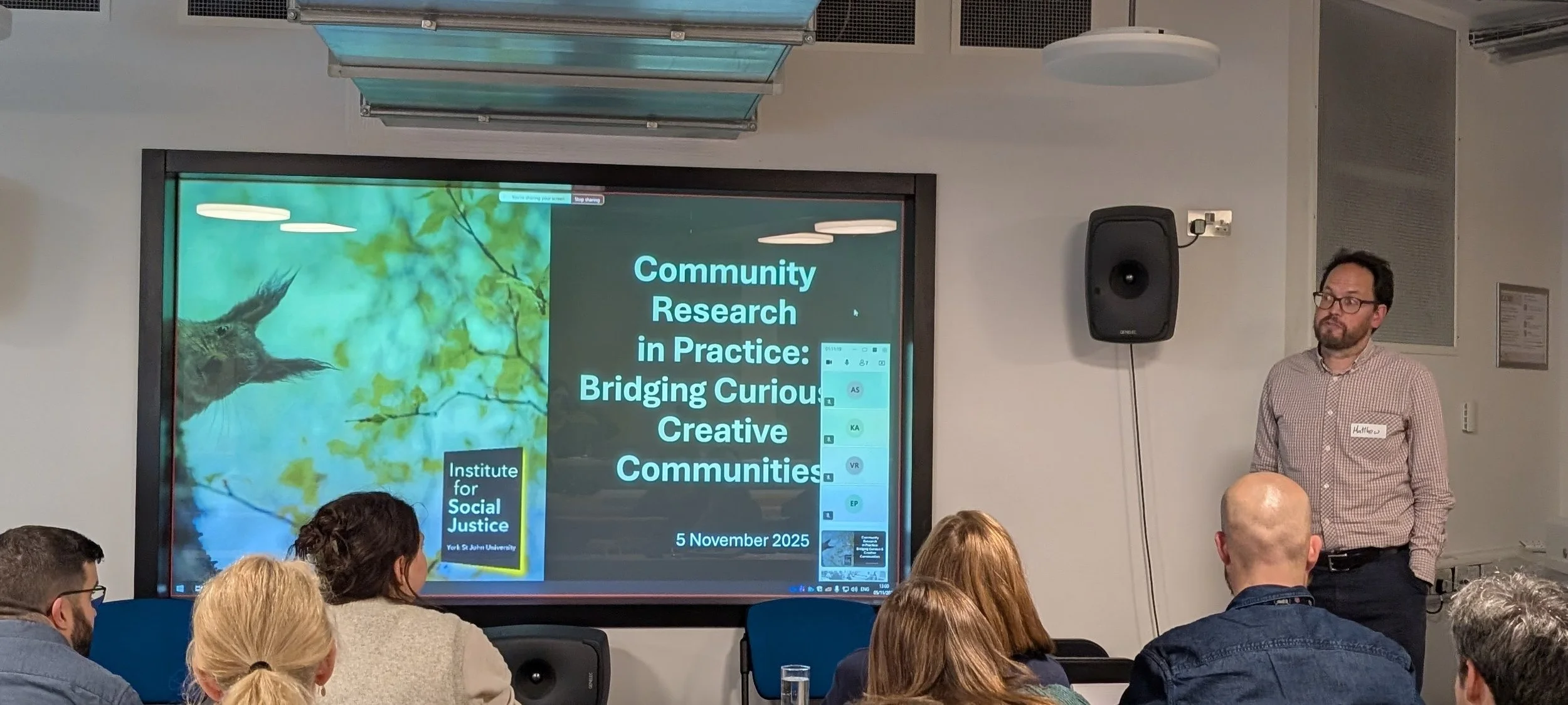
The cohort included headteachers, SENCOs, classroom practitioners and curriculum leaders. While their day-to-day roles varied, everyone was united by a commitment to ensuring every child can flourish.
For each stakeholder, this commitment looked different:
For NACE: designing professional learning that strengthens practice through cognitive challenge
For York St John University: supporting enquiry that connects research with lived experience
For school leaders and teachers: building cultures that enable excellence for all learners
For NextGenLeaders: connecting insights from primary education with the development of agency, confidence and aspiration in young people in secondary settings
Teachers were open and generous in sharing their experiences, adding real depth to the discussions and reinforcing a strong sense of shared purpose. These conversations ensured that professional learning remained grounded in classroom reality.
Understanding disadvantage and ‘hidden’ ability
Christabel grounded discussion in national evidence about how disadvantage shapes educational outcomes over time. The Sutton Trust’s Missing Talent studies highlight that high-attaining disadvantaged pupils often fall progressively behind their peers despite strong prior attainment at age 11, with the gap becoming most visible by Key Stage 4. These pupils are less likely to take subjects that keep future pathways open and less likely to achieve top GCSE outcomes, illustrating how early potential can be constrained when disadvantage and high ability intersect.
A consistent message throughout the day was that ability is not fixed. With appropriate challenge and support, learners’ understanding and potential can grow.
Christabel also introduced NACE’s Eight Core Principles for whole-school improvement through challenge, emphasising leadership, curriculum design, inclusion and the central role of teacher development in raising achievement.
Discussion also explored common misconceptions, including the assumption that more able pupils will thrive without targeted support. Participants reflected on the many forms disadvantage can take - including unstable home environments, low confidence and limited cultural capital - and how these factors interact with ability in complex and often unseen ways.
Who are the ‘more able’?
One of the most thought-provoking questions of the day was: Who are the more able?
Teachers collaborated to map different interpretations, revealing how nuanced identification can be. Ability was widely understood as domain-specific rather than simply reflected in general academic performance.
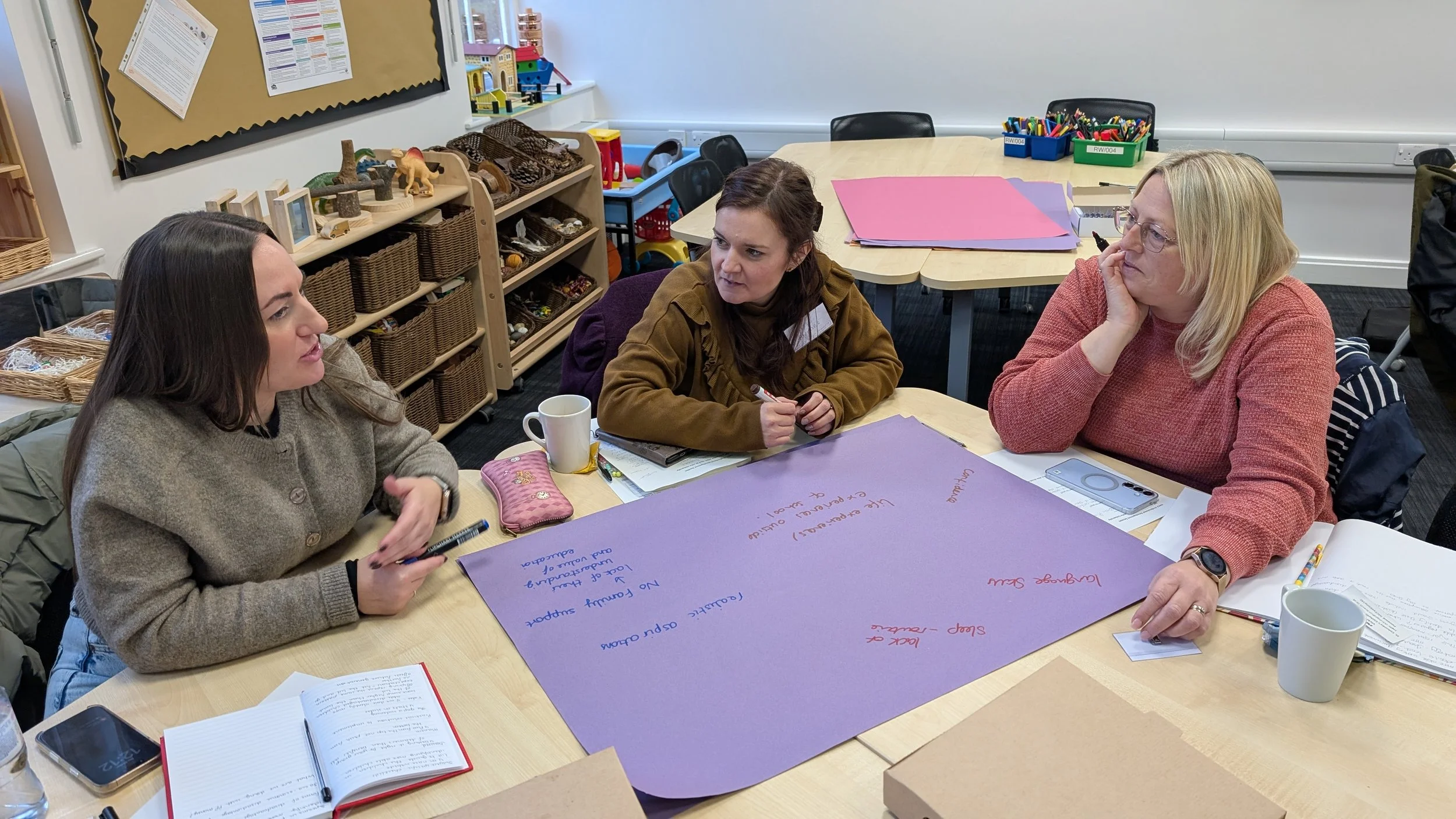
One example described a neurodivergent pupil with an exceptionally advanced understanding of washing machines from an engineering perspective. In a traditional system, this pupil might never appear on a “most able” register, yet their knowledge far exceeded age-related expectations within that domain. The discussion highlighted how conventional identification processes can overlook deep or specialised understanding.
Participants also reflected on how neurodiversity, language barriers and limited cultural capital can shape what is visible in the classroom. Pupils learning English as an additional language, for example, may demonstrate strong reasoning in non-verbal subjects while their wider potential remains less visible. These reflections pointed to the existence of a “hidden population” of able learners whose strengths are not always recognised through conventional measures.
Exploring potential and ‘teaching to the top’
Groups explored what is meant by potential and whether it can be reliably identified. A shared view emerged that potential is not fixed but develops when learners experience meaningful challenge within a supportive environment.
Discussion touched on research-informed ideas including desirable difficulty, the Learning Pit and the Zone of Proximal Development. Teachers emphasised that challenge does not equate to pressure; when learners feel safe to struggle productively, curiosity and resilience deepen.
Across schools, different metaphors were used to describe this process, a “cognitive wobble,” a “learning line,” or a “threshold concept”, yet all reflected the same underlying principle: well-supported struggle leads to deeper learning.
Designing meaningful challenge
The session also explored how classroom practice can foster deep thinking and sustained dialogue. Participants revisited approaches including metacognitive questioning, open-ended tasks and structured discussion.
The emphasis was on creating space for pupils to think, reflect and articulate ideas. Teachers shared practical examples demonstrating that meaningful challenge is achievable across diverse contexts when leadership, curriculum and professional development align.
Connecting the learning to NextGenLeaders
Attending this CPD through my role with NextGenLeaders provided an opportunity to connect insights from primary education with our work supporting young people in secondary settings. Many of the themes discussed, agency, collaboration, curiosity and reflective thinking, are central to how we support our Changemakers.
Understanding the early experiences that shape identity, confidence and aspiration helps strengthen how we design opportunities for young people to develop their ideas and leadership beyond the classroom.
A strong foundation for future learning
The day reinforced the value of collaboration:
Schools bring insight from lived practice
NACE brings expertise in cognitive challenge and high expectations
York St John University contributes research rigour and a commitment to social justice
NextGenLeaders brings youth-centred experience and a focus on agency and aspiration
When these perspectives come together, the potential for impact is far greater than any single organisation working alone.
It was a privilege to be part of a professional community committed to improving outcomes for learners whose potential deserves every opportunity to flourish.