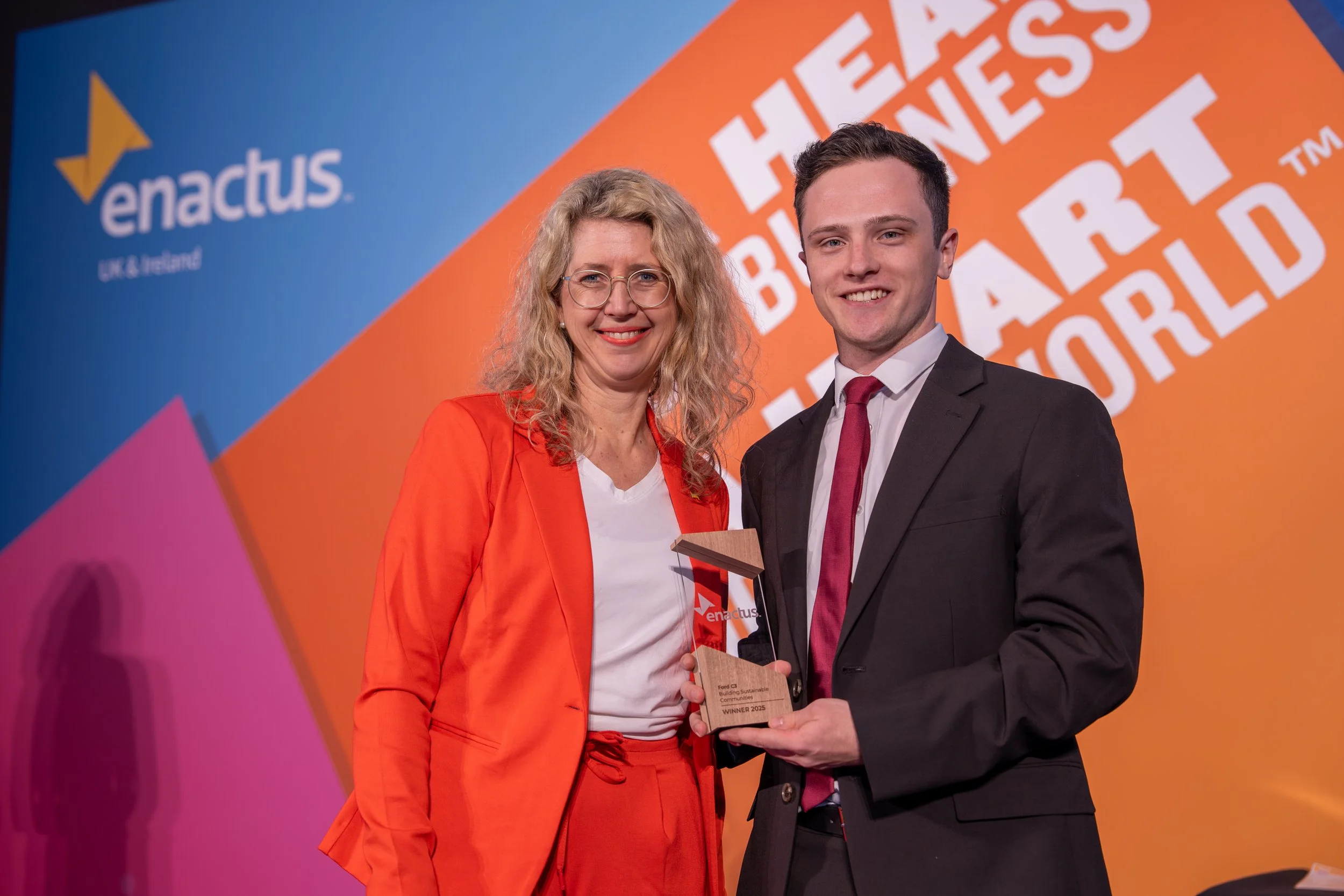

FORD C3 Competition 2026
Community Resiliency Student Challenge
Competition Overview
The Ford Community Resiliency Student Challenge 2026—a collaboration between Resolution Project, Enactus, and Ford Philanthropy—engages undergraduate students across six countries to build critical future-of-work skills while implementing community projects that address disaster preparedness, disaster relief, community resilience, and essential services. The program operates in Australia, Brazil, Germany, Mexico, South Africa, and the United Kingdom.
Purpose
The project addresses two pressing global challenges:
Youth skills gaps and workforce readiness in rapidly evolving labor markets shaped by technological change.
Community vulnerability to disasters, essential services disruptions, and structural inequities.
Eligibility Criteria
The project needs to present an innovative approach to strengthening the communities’ disaster preparedness & relief, resilience, and essential services
The project must involve students in a leadership role
The project must involve a community-based organization as a partner
The project must address an urgent and unmet community need
Key Judging Criteria
Applications will be judged on the following criteria:
-
Preparedness involves more than just having supplies. It includes systems, local and cultural knowledge, and partnerships. Building communities’ resilience can be used in a broad way. Ford Philanthropy is looking for Enactus teams to create interesting, unique, and ingenious approaches to defining this term, the more creative the better. Students’ projects may also address the set of challenges that mobility helps to address, generally around accessibility and logistics.
-
University students must be involved in a leadership role in the project, and all aspects of the project from design to implementation.
-
Winning applications will demonstrate an active and meaningful partnership with a local community-based organization. The term “community-based organization” is not used as a legal term here, but rather to describe any organization that plays a role in the life of the local community (e.g., schools, social service agencies, businesses, and government entities).
-
Successful Applications will describe a project that touches the community in meaningful ways and makes a difference on a topic of real importance to the local community.
-
You may refer to the Enactus Competition documents to learn more about impact definitions and Enactus project requirements.

What will you gain?
Gain practical career-relevant competencies—including project management, systems thinking, financial literacy, and human-centered design—while local communities benefit from student-led innovations that enhance resilience.
Prizes and Recognition
Winning teams will receive:
Grant funding to help bring your project to life.
Mentorship from Ford experts and industry leaders.
An invitation to present your project at an exclusive Ford event.

FAQs
-
A: The competition is open to university students in the UK. Teams should include a leadership role for students.
The projects submitted must have outcomes and impact between the following dates:
1 December 2025 – 30 November 2026
-
A: Each Enactus team may apply for only one grant. While teams may have many good ideas, please prioritize your needs and submit only one Application. It is recommended that teams select the project that is most clearly and strongly compatible with the purpose and requirements stated in the Program Purpose.
-
A: Teams that receive a grant are required to submit a Final Impact Report in November 2026. The submission link will be provided in late October 2026.
Additionally, successful teams should execute media outreach (e.g., press release, web, local television, print, etc.) to promote their project in partnership with Ford Philanthropy.